How can India win 100 medals at the 2036 Olympics?
A national sports strategy that rebuilds how India finds, trains and keeps its athletes, from the school playground to the Olympic podium.
Key findings
- Fewer than 2% of Indians take part in organised sport, against about 30% in the US
- India spends about ₹24 per citizen a year on sport
- Almost half of the people we surveyed gave up sport to put their studies first
An independent proposal, written in response to a competition brief. The organisation it addresses did not commission this work, and we do not suggest it has acted on our recommendations.
The challenge
India won six medals at the Paris 2024 Olympics. Fewer than 2% of its people take part in organised sport, states spend between 0.1% and 0.6% of their budgets on it, and talent is spotted late and lost early. What would it take for India to win 100 medals at the 2036 Olympics?
Our approach
We traced the athlete pipeline from a child's first contact with sport to elite performance, and looked for where it leaks. Alongside government data, evaluations of the Khelo India scheme and comparisons with the US and China, we surveyed 83 people about why they did or didn't pursue sport, and interviewed three professional athletes, a Sports Authority of India coach and a private coach.
How we found the answer
The gap is structural, not a shortage of talent. The same bodies run grassroots and elite sport, though the two need different things. States control sport and fund it unevenly. Children are spotted late, good coaches leave the public system, girls drop out under social pressure, and most young people choose studies over an uncertain sporting career.
So we built the plan around the whole pipeline, in three pillars: building the foundation, promoting inclusion and achieving excellence, rather than spending more on elite athletes alone.
What we proposed
- Split governance: a National Grassroots Sports Development Authority for participation, and a Sports Performance Institute of India for identified talent.
- Move sport from the State List to the Concurrent List, for steadier funding and common standards across states.
- A digital athlete card for every student in Kendriya and Navodaya Vidyalayas (over 17 lakh students), using fitness and body measurements to spot natural talent and match children to sports.
- Multi-sport mats in these schools, to introduce Olympic disciplines beyond the nine sports most children ever try.
- Raise public-sector coach pay to ₹1 lakh a month, with accreditation and sports science built into training.
- Tax incentives and public recognition to bring more CSR money into sport, and public-private partnerships to run training centres.
- Safe, women-specific facilities, scholarships for athletes from low-income families, and flexible schooling so athletes don't have to choose between study and sport.
Potential impact
The plan sets medal targets for each Commonwealth, Asian and Olympic Games on the way to 2036. Our sport-by-sport estimate comes to 110 Olympic medals in 2036, 37 of them gold, led by athletics, wrestling and shooting.
Modelled in our analysis. These are estimates, not results measured in operation.
Recognition
The full strategy
20 pages, view only. Every page carries the reader's email address as a watermark.
Sign in to read the full strategy
Our decks are shared with readers who sign in with Google. Every page you open carries your email address as a watermark.
When you sign in we record your name and email address (from Google), which deck you open and when, your approximate city and country, and your browser and device. Privacy policy
More of our work
Case studies and other strategy proposals.
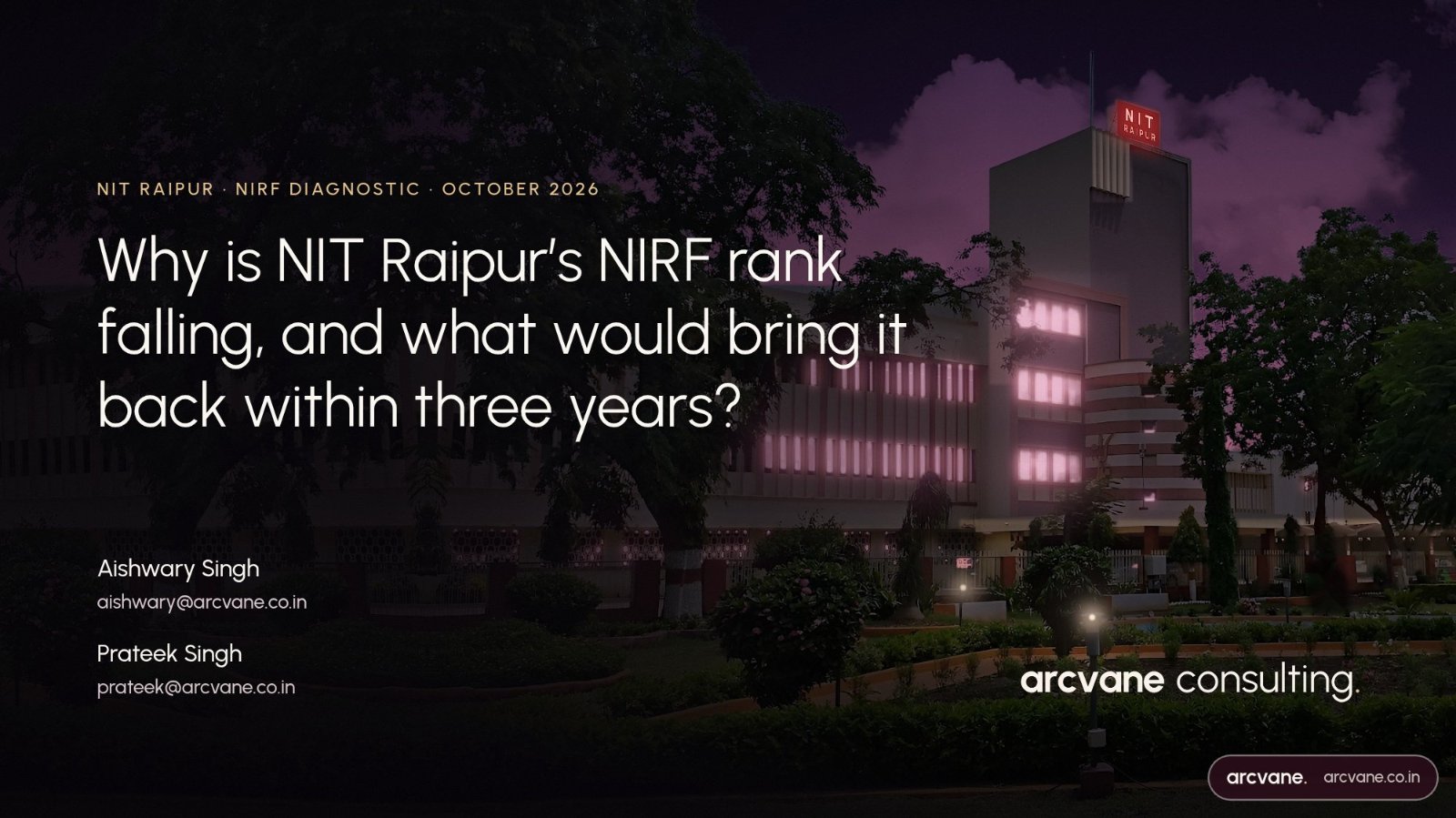
Why is NIT Raipur's NIRF rank falling and what would bring it back within three years?
NIT Raipur fell from 64th to 86th in NIRF Engineering between 2021 and 2025, although its score rose. We traced the lost ground to six fixable causes and found seven measures, each already working at a peer NIT worth about 4.2 points.
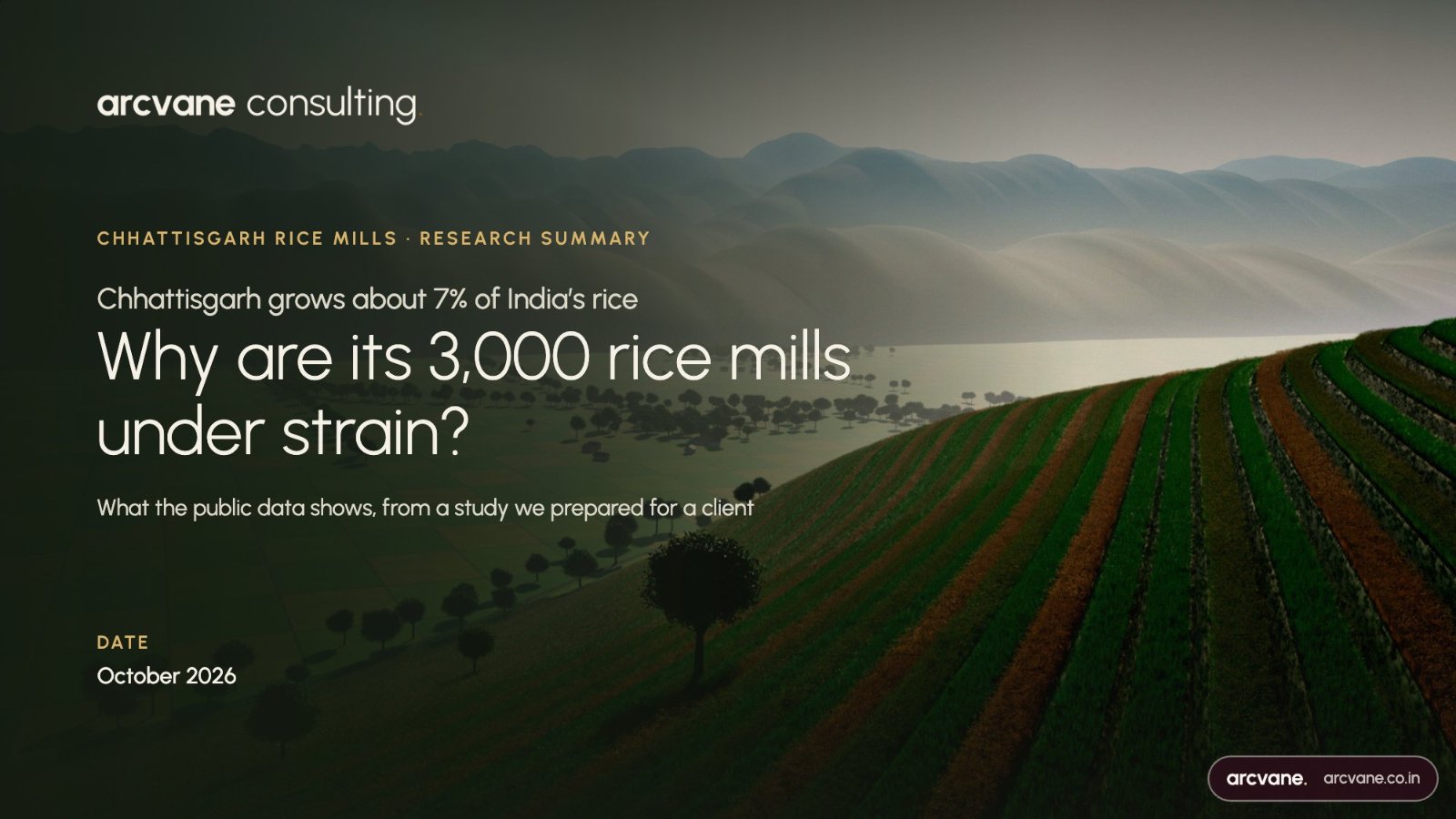
How can Chhattisgarh’s 3,000 rice mills stay profitable when the paddy runs out mid-year?
Chhattisgarh’s 3,000 rice mills sit at the centre of India’s rice supply, yet earn about ₹500 a tonne, wait months to be paid and run short of paddy by mid-year. We traced where the strain comes from, using public data.

Coffee costs are up 50 to 60%. How can a growing café chain stay profitable while opening about 120 new cafés a year?
Leading Coffee Chain
Get in touch
Tell us what you’re deciding and by when. We’ll reply with a few questions or a time to talk.