 Case study · Government and public sector
Why is NIT Raipur's NIRF rank falling and what would bring it back within three years?
NIT Raipur fell from 64th to 86th in NIRF Engineering between 2021 and 2025, although its score rose. We traced the lost ground to six fixable causes and found seven measures, each already working at a peer NIT worth about 4.2 points.
Built entirely from public data: NIRF rankings and data submissions 2018 to 2025, NIT Raipur notices and reports, CSR filings and peer NIT documents. Prepared for NIT Raipur's leadership in October 2026. Figures marked (est.) are Arcvane estimates, explained in the study's appendix.
The challenge
NIT Raipur's NIRF Engineering rank fell from 64th in 2021 to 86th in 2025, and its Overall band dropped from 101–150 to 151–200. Yet its score rose over the same years, from 44.8 to 47.6. The leadership needed to know why the rank kept falling while the score went up, and what would bring it back within three years.
What we did
We rebuilt NIT Raipur's NIRF scores from the published rankings and data submissions for 2018 to 2025, and compared them head by head with 12 other NITs. We split the shortfall against the rank-75 line into Raipur's own decline and faster improvement by peers, then traced each lost point to a cause using institute notices, placement reports, PG admission bulletins and CSR filings. For every cause we found a peer NIT that had already solved it, and estimated the gain with NIRF's own formulas.
What we found
Of the 4.7 points Raipur fell behind since 2021, 2.1 is its own decline in teaching and outreach and 2.6 is peers improving faster. The biggest single gap is faculty: 272 in post where the 1:15 ratio needs 369. We recommended seven measures, each proven at a peer NIT: hiring all year towards 1:15, CSR-funded labs, PG outreach, a PG placement committee, credit for NPTEL and SWAYAM courses, an alumni-led perception programme, and many small research grants. Together they are worth about 4.2 points, or rank 63 on 2025 scores, and bring rank 75 within reach by NIRF 2030 (est.).
Pages from the study
A page from the deck, open to everyone. Select one to see it full size.
The full deck
38 pages, view only. Sign in with Google to read it.
Sign in to view this deck
Our decks are shared with readers who sign in with Google. Every page you open carries your email address as a watermark.
When you sign in we record your name and email address (from Google), which deck you open and when, your approximate city and country, and your browser and device. Privacy policy
More of our work
Other case studies and the national case competitions we have entered.
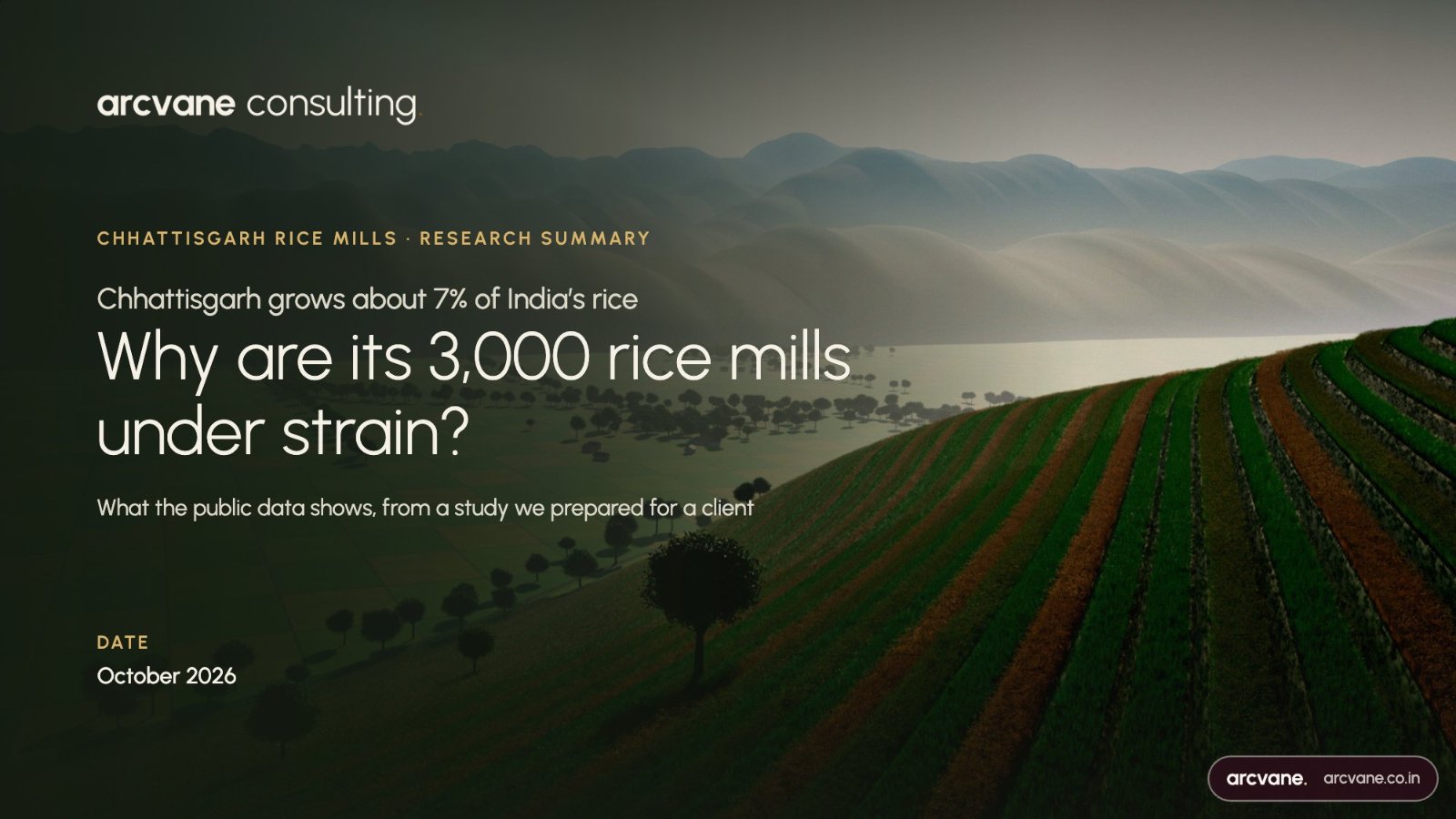
How can Chhattisgarh’s 3,000 rice mills stay profitable when the paddy runs out mid-year?
Chhattisgarh’s 3,000 rice mills sit at the centre of India’s rice supply, yet earn about ₹500 a tonne, wait months to be paid and run short of paddy by mid-year. We traced where the strain comes from, using public data.

Coffee costs are up 50 to 60%. How can a growing café chain stay profitable while opening about 120 new cafés a year?
Leading Coffee Chain
 Public policyNational winner, 1st of 57,119 applicants
How can India win 100 medals at the 2036 Olympics?
A national sports strategy that rebuilds how India finds, trains and keeps its athletes, from the school playground to the Olympic podium.
- Fewer than 2% of Indians take part in organised sport, against about 30% in the US
- India spends about ₹24 per citizen a year on sport
- Almost half of the people we surveyed gave up sport to put their studies first
Get in touch
Tell us what you’re deciding and by when. We’ll reply with a few questions or a time to talk.